
Why Panama Is Becoming a Strategic AI Data Center Hub in Latin America
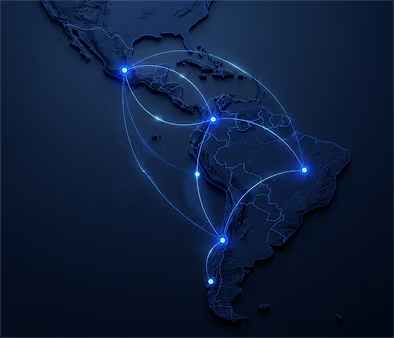
Panama has been called a natural crossroads for a century. It is the narrowest point between two oceans, the only place in the Americas where Atlantic and Pacific submarine cables converge, and the pinch point of hemispheric trade.
None of that built a data centre industry. What changed is not the geography. It is that the scarcest input in AI infrastructure became electricity, and Panama has more of it than it uses.
How much data center capacity does Latin America have?
Around 1,105 MW for a region of 650 million people, and almost all of it sits in four cities: São Paulo, Querétaro, Santiago and Bogotá. Brazil alone holds over 41 percent of regional investment.
Panama barely registers, with roughly 2 MW of installed capacity nationally. Its cables carry the region's traffic while its compute footprint remains close to nothing. That gap is the opportunity.
What makes Panama's power position unusual?
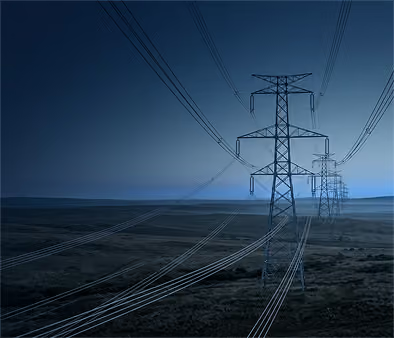
Installed generation capacity sits well above national demand, which leaves genuine room for large industrial loads. The energy mix reached 73 percent renewables in 2024 across 5.1 GW of capacity, and a decade of deliberate diversification away from hydro means rainfall variability no longer determines national supply.
That matters because power has become the constraint almost everywhere else. Grid interconnection queues in major US markets now run three to five years, and roughly half of the projects planned there for 2026 were delayed or cancelled.
Why does Panama's submarine cable position matter?
Seven cable systems currently cross Panamanian waters, carrying effectively all of the region's internet traffic. TAM-1 landed in early 2026 with up to 650 Tbps toward the United States, Central America and the Caribbean.
What matters is direction rather than count. Panama's systems face both the Caribbean and the Pacific, joined by terrestrial routes across the isthmus, so an incident in one ocean basin does not isolate the country. No amount of capital creates that property after the fact.
Who is this new capacity built for?
Increasingly, single large occupants rather than many small ones. A single AI campus can draw more power than an entire national market currently holds, and it wants that power in one place, at densities the region's existing stock cannot physically support.
At Arrow Partners. The campus at Cristóbal is a single-occupant AI facility designed for 400 MW of IT load across single-storey, column-free halls. Power comes from transmission that already exists: two independent points of connection at two separate substations adjoining the site, on the national 230 kV system, with four consumer circuits under bilateral supply contracts. Any two of those circuits carry the whole load, so losing an entire substation leaves the campus at full capacity. Behind the connection sits 300 MW / 300 MWh of energy storage across every medium-voltage section.
Cooling is direct-to-chip liquid on a closed dry loop, running in free cooling every hour of the year with no fresh water consumed. The campus is concurrently maintainable, equivalent to Uptime Institute Tier III at the full IT load.
Panama will not become the largest data centre market in Latin America. What it offers is something the largest markets currently cannot: power that can be energised this decade, on cables that already carry the region's traffic.
The infrastructure was already here. What we are adding is the compute.
FREQUENTLY ASKED QUESTIONS
Why is Panama attractive for AI data centers?
Generation capacity above national demand, the only Atlantic–Pacific cable convergence point in the Americas, and a dollarised economy with a stable legal framework.
What is the difference between a hyperscale AI campus and a colocation data center?
Colocation serves many tenants sharing one facility. A hyperscale AI campus is built for a single occupant and dimensioned around one workload.
Is Panama's electricity grid renewable?
The energy mix reached 73 percent renewables in 2024 across 5.1 GW of installed capacity, per BloombergNEF Climatescope.
How large is the Latin America data center market?
USD 7.16 billion in 2024, projected to reach USD 14.30 billion by 2030 at 12.22 percent CAGR.