Why AI Is Reshaping the Map of Global Internet Infrastructure
The physical internet grew up around people. Data centres were built near large populations, cable routes followed trade routes, and peering exchanges appeared in major cities. For thirty years the map of the internet was roughly a map of where people live.
AI is redrawing it.
Why do AI training and inference want opposite locations?
Because they are different activities with almost nothing in common.
Training builds a model. Enormous numbers of processors work the same problem simultaneously for weeks or months, and they must be close together because they exchange data constantly. What training does not care about is where the users are: a model can be trained anywhere and copied to wherever it is needed.
Inference uses the model once it exists. Someone asks, the model answers. That does not need thousands of processors in concert. It needs a response fast enough to feel immediate, which means being close to the person asking, because distance cannot be engineered away.
Training concentrates. Inference distributes. Current construction reflects both pressures at once.
Why does training follow power rather than users?
Because a large training cluster consumes power at the scale of a small city, and in most established markets the queue for that much capacity runs several years.
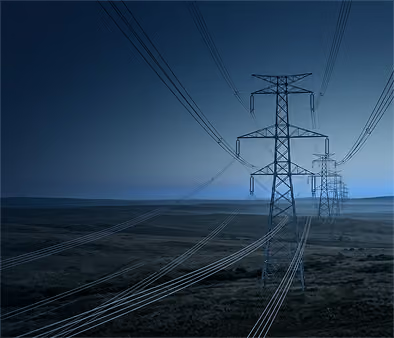
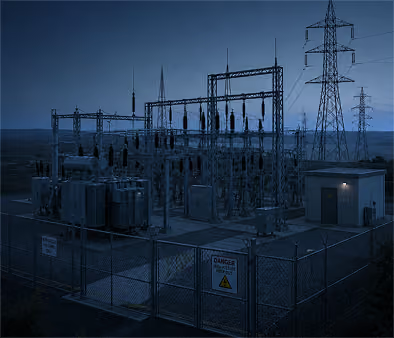
So training capacity is appearing in places chosen for their electricity rather than their populations: regions with surplus generation, sites beside existing transmission, locations that would never have attracted a conventional data centre. For thirty years infrastructure followed demand. Training infrastructure follows supply.
How does inference change the edge of the network?
By making it computationally heavy for the first time.
Content delivery already distributed the internet somewhat, but caching is simple: a copy of a file, served on request, needing storage and bandwidth rather than computation. Inference needs actual processing at the edge, which means accelerators, power and cooling in places that previously held only caching equipment.
Volume compounds it. Training happens once. Using the model happens continuously, and grows every time an application reaches production. Inference is expected to consume considerably more compute than training ever did, across far more locations.
How is AI changing submarine cable demand?
By creating two different requirements at once. Conventional internet traffic is directional, flowing from a few sources to very many users. AI adds high-capacity traffic between a handful of very large facilities, as model weights, datasets and checkpoints move between them.
The result is demand for very large trunk routes between major compute sites and low-latency reach into where users actually are. Investment in new submarine systems is projected to exceed sixteen billion dollars between 2026 and 2029, driven substantially by that combination.
Which locations are becoming valuable?
Places with surplus generation, whether or not they have large populations. Places where multiple cable systems converge, because both trunk capacity and low-latency reach depend on them. Places outside the two or three markets holding most of a region's capacity, because concentration is itself a risk. And stable legal and monetary frameworks, because the assets are expensive and the commitments long.
None of those criteria is about population size.
For thirty years the internet was built where the people were. AI is building it where the power is.
FREQUENTLY ASKED QUESTIONS
What is an AI factory?
A facility built specifically for AI computing, dimensioned around the GPU cluster rather than around general-purpose IT equipment.
How much power does a large AI training cluster consume?
At the scale of a small city, which is why available connection capacity now determines where training happens.
Will AI inference use more compute than training?
Over time, yes. Training happens once per model; inference happens continuously.
What is edge inference?
Running a trained model close to the user rather than in a central facility, so that responses arrive faster.